
The layout of your kitchen determines how the heart of your home looks, feels, and functions. Intelligent kitchen layout planning is therefore essential, especially when the remodeling project needs to work within an existing footprint. It’s also crucial that this planning occurs before selecting cabinets, finishes, and appliances. The result will be a layout that improves workflow, resale value, and daily living. In this article, our team examines how the collaborative design-build process makes kitchen layout remodeling more effective, easier, and streamlined.
When a Kitchen Remodel Can Fix the Layout — Without Adding Square Footage
When things feel cramped or chaotic, it’s easy to assume a kitchen needs to be extended. The real problem might actually be a flawed layout rather than size. A poor workflow is frequently the culprit, even when the existing space is sufficient for an optimized layout. Better, more modern designs can quickly address outdated work triangle configurations, closed-off spaces, inefficient storage, and tight circulation paths.
Increased functionality and maneuverability are achievable by relocating appliances, shifting prep areas, and redesigning storage. Removing a wall can be helpful, but strategic reconfiguration within the same square footage can be just as powerful, as we did in this Aptos family home remodel.

“Many homeowners assume they need more square footage, but in many cases, a thoughtful remodel layout solves the real problem. When we rework zones and circulation, the kitchen often feels dramatically larger without an addition,” says Andrew Talmadge, President of Talmadge Construction.
The Most Effective Kitchen Remodel Layout Types
The best kitchen remodel layout depends on your home’s existing footprint and how your family uses the space. One-wall kitchens can be reconfigured to improve storage and define prep zones. Galley kitchens, often long and narrow, can benefit from enhanced clearances and smarter appliance placement to increase efficiency.
L-shaped and U-shaped kitchens offer maximum flexibility. They also add open-plan connectivity and stronger zone separation between cooking, prep, and cleanup. This is what we did to improve a beautiful kitchen on the Westside of Santa Cruz, CA, incorporating features that enhance functionality and workspace.
In many Santa Cruz County remodeling projects, opening a closed kitchen to adjacent living areas also transforms how the entire home feels.
Kitchen islands are a popular request, adding versatility and increased multifunctionality to the space. They anchor the layout, improve workflow, and create a natural gathering area. Similarly, converting a peninsula to an island improves circulation and functionality.
“The best remodel layouts improve how zones relate to each other — cooking, prep, storage, and cleanup. We’re not just replacing cabinets — we’re redesigning how the space works,” says Danielle Grenier, Lead Architect & Design Department Manager at Talmadge Construction.
How Traffic Flow Should Drive Your Kitchen Remodel Layout
Traffic flow is an important guide for every kitchen remodel layout decision. The traditional work triangle still has value, but modern smart kitchen design emphasizes defined work zones for prep, cooking, cleanup, and storage. The goal is to reduce the need to cross paths and eliminate bottlenecks, such as we did in this kitchen remodel for a family in Soquel, where a pathway from the kitchen to the dining area was improved, among other things.
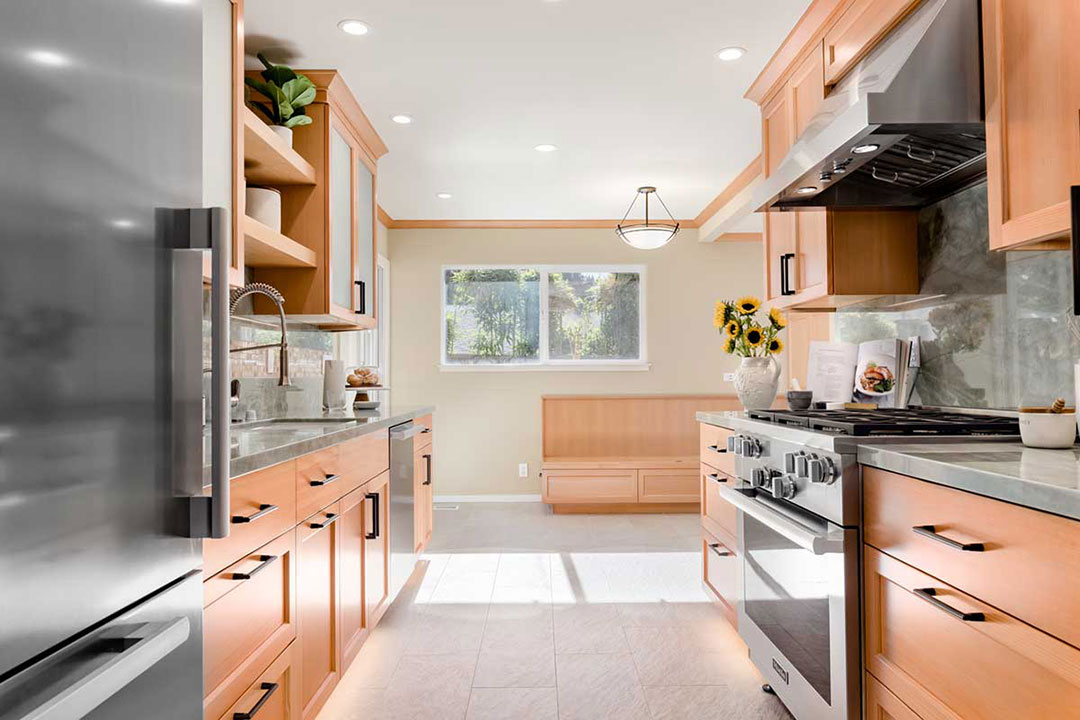
Clearance is another important factor in good kitchen design. Walkways around islands, appliance door swings, and landing spaces beside ranges and refrigerators all affect how we interact with our kitchens on a daily basis. These need to be considered during the layout planning stage.
Sightlines are equally important in open layouts. Increased visibility benefits parents with young children and increases the perceived amount of space and light. The best kitchen remodel layouts are designed according to your lifestyle, including whether you have children, pets, or a multi-cook household.
“In remodels, we study movement patterns first. If we can eliminate crossing paths and bottlenecks, the kitchen instantly feels better — even before finishes go in,” says Wilhelm Venter, Designer at Talmadge Construction.
Island vs. Peninsula Decisions in a Kitchen Remodel
Island or peninsula? Which is better for your kitchen? Choosing between an island and a peninsula depends on several factors, including structural and clearance limitations and workflow requirements. Many homeowners request an island, but kitchen layout planning for remodel projects must confirm that the space can support it.
In some Santa Cruz County homes, a redesigned peninsula is the best option, providing ample prep space, seating, and storage without disrupting optimized circulation patterns. Converting a peninsula into an island can work well, but often requires structural adjustments, electrical extensions, and relocating plumbing fixtures. As you might imagine, this will affect your budget.
“Not every remodel should force an island into the plan. We evaluate clearance and workflow first — sometimes a redesigned peninsula performs better,” says Danielle.
Kitchen islands are popular for a reason, given their multifunctionality and versatility, but it’s important to assess how they will fit into your kitchen interior. Islands with added seating might require a reduction in prep surface space, while increasing storage capacity can impact legroom.
Storage Strategy in a Kitchen Remodel
Storage is essential to a functional and beautiful kitchen. Rather than simply replacing cabinets, consider how storage can be a core guiding priority during layout reconfiguration. Intelligent kitchen design takes into account how you use the kitchen on a day-to-day basis, including cooking habits and hosting styles, which, in turn, influence the amount and type of storage you need.
Make use of dead space where possible, including converting underused corners, shallow shelves, and oversized filler panels into functional storage. Drawer-based base cabinets improve access and visibility while pull-outs, vertical tray dividers, and specialty inserts bring order to everyday items.
Appliances garages and concealed storage are excellent ways to keep countertops clear. It’s also worth exploring how you can enhance your pantry within the existing footprint with improved shelving and storage units.

“A remodel is the best time to eliminate clutter permanently. We design storage around what the homeowner actually owns — not generic cabinet counts,” says Danielle.
Structural & Mechanical Factors That Shape Remodel Layout Options
Every kitchen remodel is shaped by structural and mechanical realities. Load-bearing walls, for example, limit how far a space can open without installing beams and obtaining an engineering review. Careful structural planning is usually essential when removing walls that support open-plan kitchen designs.
Plumbing relocation during layout changes affects sink and dishwasher placement and, depending on the scope and potential limits, can add to your budget requirements. The same applies to moving a range if modifications to vents and hoods are needed. Electrical panel capacity may also need upgrading to support new appliance loads and island outlets, as may HVAC runs if walls are moved.
Your experienced design-build team will help balance your design goals with smart engineering decisions that fit within your budget.
“The layout you want and what your existing structure allows aren’t always the same — remodel design is about smart engineering tradeoffs,” says Andrew.
How to Choose the Right Kitchen Remodel Layout for Your Home
The right kitchen layout for your home depends on your overall goals and the constraints of your existing footprint. Some homes support opening walls to adjoining rooms, increasing the space and the amount of light that enters the interior, as in this kitchen and great room reconfiguration we completed for a delighted family in Aptos. Others might require more strategic reconfigurations within more defined boundaries.
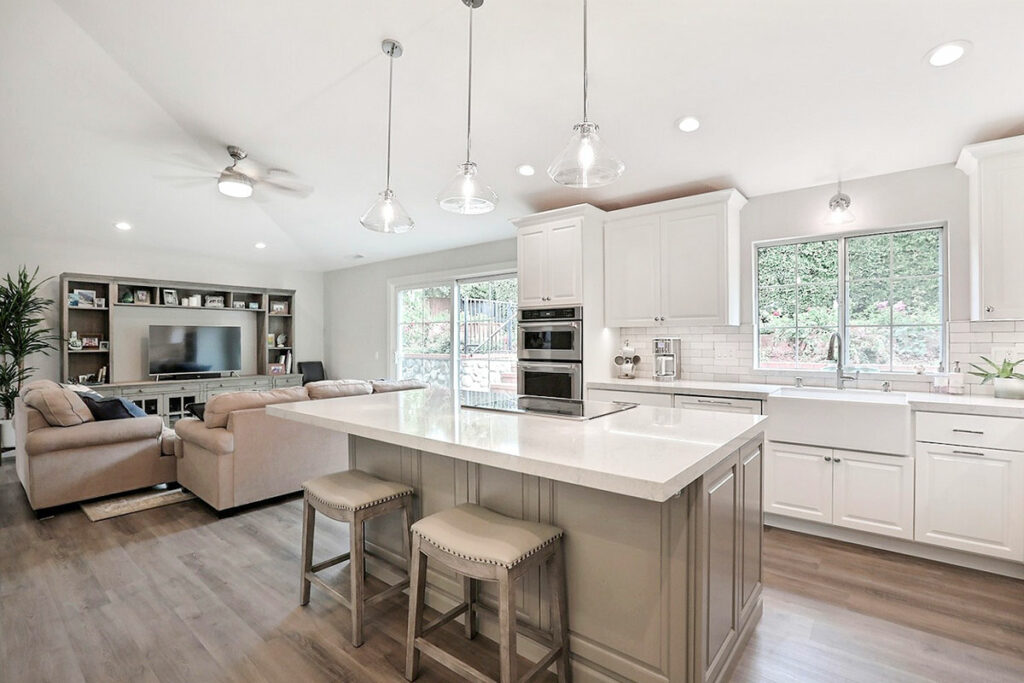
How you cook and use appliances also matters. Serious home chefs might prioritize prep zones and optimized appliance placement, while frequent entertainers might focus more on island seating, sightlines, and hosting features. The size of your household will also shape design and layout decisions, together with daily routines, physical abilities, and storage needs.
“The right remodel layout feels natural — like the kitchen finally works the way it always should have. When flow and proportion align, homeowners notice it immediately,” says Wilhelm.
Long-term planning is equally important. Smart kitchen design considers resale value without sacrificing how you live today.
Why Layout Planning Should Happen Before Design Selections
It’s incredibly important that your kitchen layout be finalized before selecting cabinets, finishes, and fixtures. Function is the priority, which in the long run protects your investment and reduces the need for costly revisions later. When features that support functionality, such as circulation and storage, are resolved early, then luxury design selections become purposeful rather than reactive.
Feasibility studies are an important part of the design phase of a design-build remodel. They reveal structural and mechanical constraints before construction begins. This clarity allows homeowners to make informed decisions about walls, plumbing changes, ventilation adjustments, and electrical upgrades.
Design-build collaboration, where designers, architects, builders, and engineers work together under one roof, ensures the best layout planning that supports optimized functionality, beautiful aesthetics, and long-term value, all aligned with your budget and goals.
Thinking of Remodeling Your Santa Cruz Kitchen?

When you work with a Santa Cruz design-build contractor like Talmadge Construction, we ensure that every element of your kitchen is planned, coordinated, and executed with care from start to finish.
Our unified team of designers, craftsmen, and builders, based in Aptos, is dedicated to preserving coastal homes and delivering expert remodeling to accommodate families’ lifestyle changes. We’ve been doing so for over 40 years and would love to help you as well.
As a community-focused design-build firm passionate about eco-friendly design and local education, we are committed to exceptional customer service, quality workmanship, and complete integrity. Are you looking to remodel or extend your coastal property? Or transform a fixer-upper? We’ll be with you every step of the way.
Here at Talmadge, we place our reputation for integrity at the center of everything we do, advocating for homeowners because they deserve a remodel that makes life easier. Recognizing that Santa Cruz County homeowners are our neighbors and fellow business owners, we place equal importance on contributing to the community’s growth, including being a strong supporter of education. We firmly believe that improving people’s lives at home and through education translates to better societies.
When you remodel with Talmadge, you directly support education in the local community.
To arrange a free consultation with one of our friendly team, call us today at 831.689.9133.