How Design-Build Saves Homeowners Money
Do it right. Do it once. That’s the principle behind design-build remodeling—and why it often leads to better financial outcomes over time.
When a project is thoughtfully planned and executed by a unified team from the start, it reduces the likelihood of costly missteps, redesigns, and decisions that don’t hold up long-term.
While the upfront investment can be higher, it often results in greater overall value by minimizing rework, controlling costs, and creating a home that continues to perform as your needs evolve.
This guide explores how the design-build approach helps homeowners make smarter, more enduring investments in their homes.
Does Design-Build Save Money?
In many cases, yes—but not by simply reducing upfront costs.
Design-build creates savings by improving how decisions are made and executed throughout the project. When design and construction are aligned from the start, homeowners benefit from:
- Fewer costly revisions due to early input on feasibility and construction methods
- More accurate budgeting as pricing is considered alongside design decisions
- Reduced delays through better coordination and streamlined communication
With a unified team, design choices are informed by real-world construction knowledge from day one. This leads to a more efficient process, fewer surprises, and a final result that aligns with both your vision and your investment.
In fact, research supports the value of the design-build approach. A study by Penn State University found that design-build projects are:
- Completed 33% faster
- Up to 6% less expensive than traditional methods
- Associated with 6% fewer change orders
Faster timelines and fewer change orders can significantly reduce overall project costs while minimizing disruption. The Federal Highway Administration has also documented measurable benefits:
- 14% reduction in project duration
- 3% reduction in construction costs
While every home remodeling project is unique, these findings reflect what many homeowners in California experience firsthand: when design and construction are aligned from the start, projects tend to move more efficiently, with fewer surprises and better cost control.
Design-Bid-Build vs. Design-Build
Factors
Design-Bid-Build
Design-Build
Model
The architect and general contractor operate as separate entities
All disciplines (architecture, interior design, and construction) operate as one integrated team.
Impact
Separate firms may lead homeowners to approve plans before receiving practical budget input from the builder
All essential project professionals collaborate to develop a design aligned with construction realities and budget expectations
What Happens During Construction
- Redesigns due to feasibility or constructability issues
- Scope reductions to align with budget constraints
- Unexpected change orders as conditions or costs shift
- Earlier, more accurate pricing insights
- Greater cost control throughout the project
- Smarter, more informed decision-making
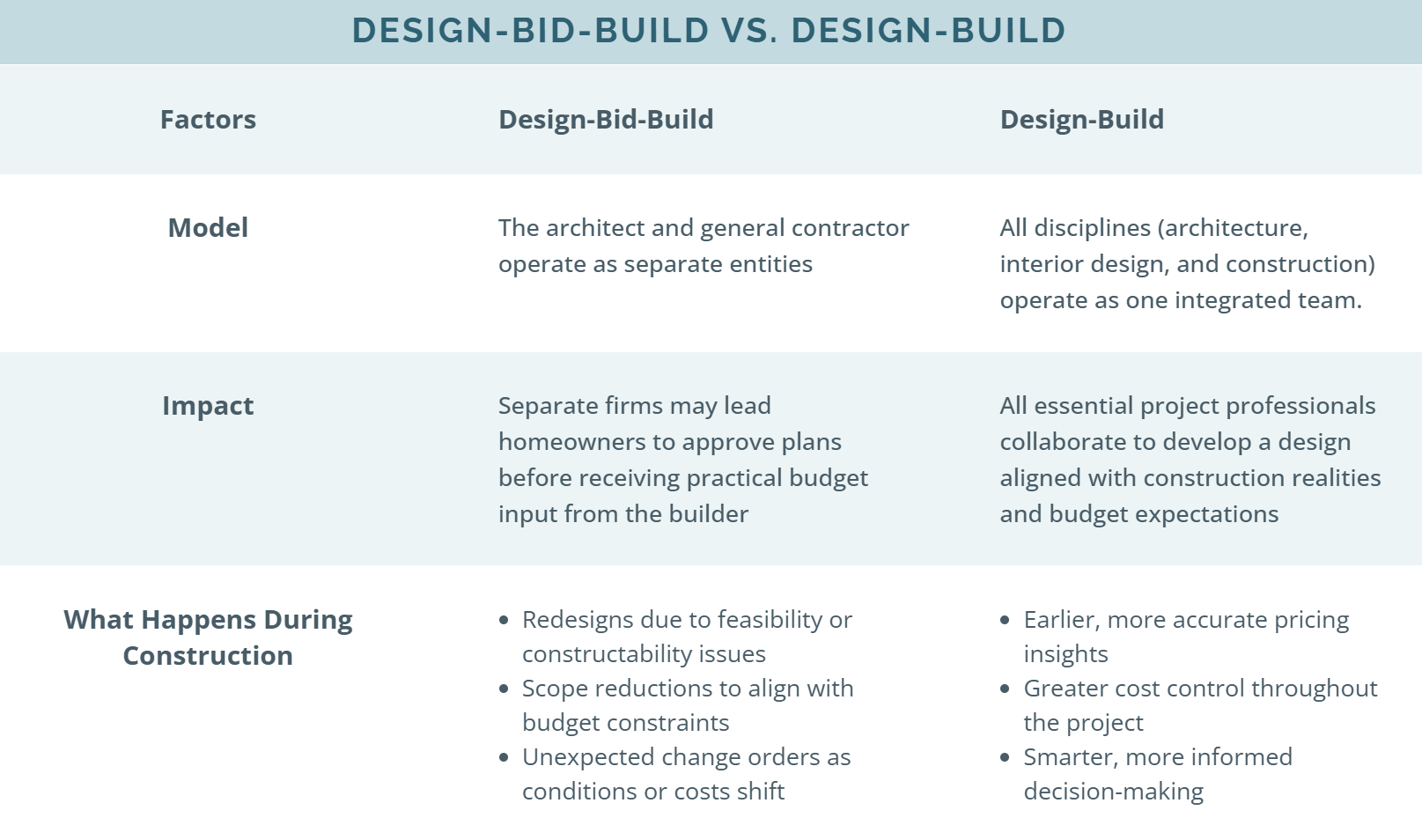
The design-build approach delivers stronger financial outcomes because pricing, materials, scheduling, and constructibility are considered together rather than in separate stages. For many homeowners, this model results in fewer surprises, better planning, and more predictable savings over the life of the project.
The Process:
Design and Pricing Develop Together
In traditional remodeling models, design is often completed before accurate pricing is fully understood. Homeowners may approve plans based on assumptions, only to discover later that the cost to build exceeds expectations. This can lead to budget increases, redesigns, or scope reductions after key decisions have already been made.
In contrast, the design-build approach aligns design and pricing from the beginning. Cost planning evolves alongside the design, providing a clearer understanding of scope, priorities, and real-world investment.
What this means for homeowners:
- More Accurate Pricing: Early involvement from the construction team allows for continuous budget feedback as the design evolves.
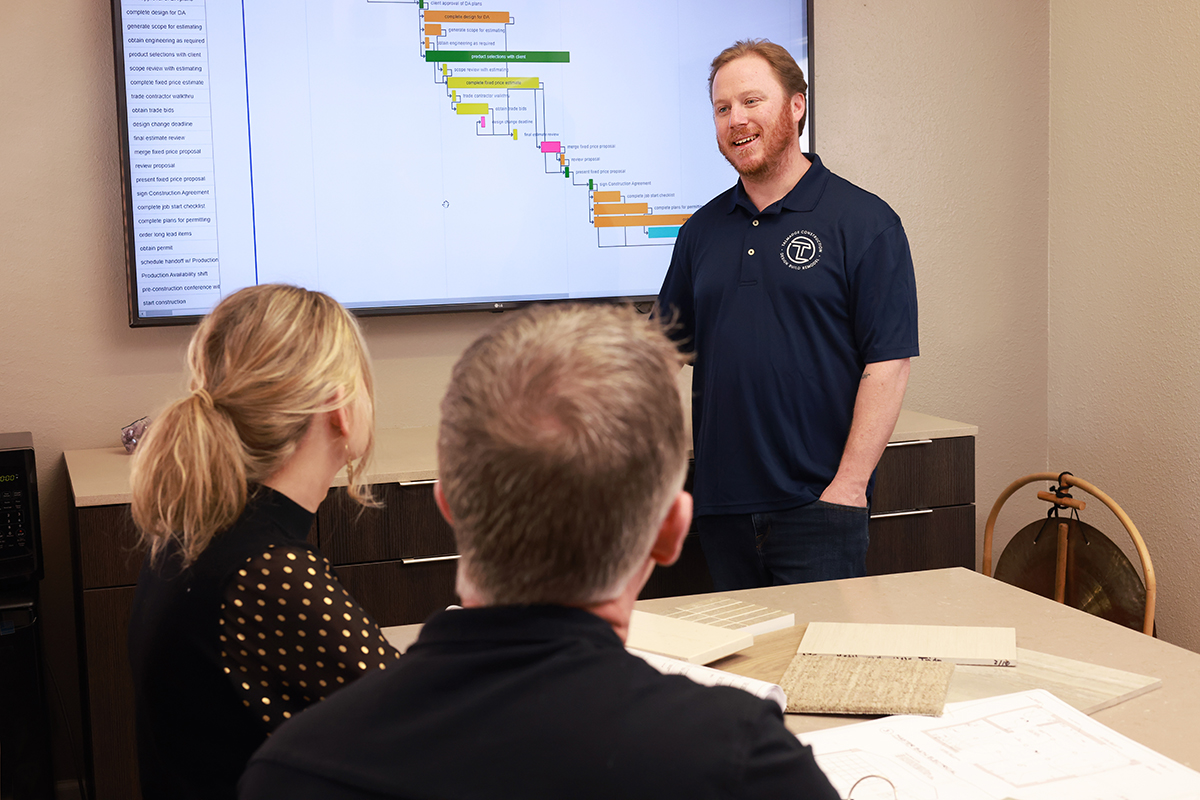
- Real-Time Cost Visibility: Many firms use integrated systems to track budgets, allowances, changes, and forecasts throughout the process, giving homeowners a clear view of where their investment is going.
- Reduced Risk and Fewer Surprises: With one unified team, potential issues are identified and addressed early, minimizing unexpected changes during construction.
- Cost Accountability: Rather than managing separate contracts, homeowners work with a single team responsible for pricing, communication, and overall project execution.
By Design:
Design-Build Cost Savings Through Team Collaboration
When designers, builders, and interior specialists collaborate from the beginning, they can make choices that support the home’s full life, not just the immediate cost. For homeowners, that means a remodel can be shaped around both present needs and future lifestyle changes. The design-build approach helps the home remain practical and comfortable for years to come.
- Better Design, Better Build: Better detailing, stronger communication, and more practical planning often lead to fewer mistakes and a finished product that holds up better over time.
- Stronger Value Engineering: The combined expertise of professionals enables designs with cost-effective alternatives without compromising quality or structural integrity.
- Faster Issue Resolution: Potential conflicts can be identified during design rather than after work begins, reducing delays and reactive fixes.
- Material Choice Efficiency: Builders help guide decisions toward products that offer the right balance of aesthetics, quality, durability, and price, reducing waste and avoiding unnecessary overspending.
During Construction:
How Design-Build Helps Control Costs
One of the most common drivers of increased project costs is misalignment between designers, contractors, and engineers. In traditional construction models, these disconnects can lead to miscommunication, rework, and delays once construction is underway.
The design-build approach minimizes these issues by keeping the entire team aligned from the start. With everyone working from the same plan, projects are more likely to stay on track with the original budget, schedule, and goals.
What this means during construction:
- More Efficient Handling of Changes
Adjustments are a normal part of remodeling. When managed by a single team, changes can be evaluated and implemented quickly, without the delays of coordinating across separate firms. - Reduced Rework and Miscommunication
Integrated teams reduce the risk of errors caused by misinterpreted plans or gaps between design and execution. - Better Use of Time and Materials
Coordinated planning leads to fewer delays, less duplication of effort, and more efficient use of resources.
How Design-Build Saves Money for Homeowners in Santa Cruz County, CA
For homeowners in Santa Cruz County, this approach supports smarter planning, more predictable outcomes, and a home that performs well for years to come.
With decades of experience in the region, Talmadge Construction brings a design-build approach focused on helping homeowners make informed decisions and maximize the value of their investment. Create a home that’s thoughtfully designed and built right the first time!